
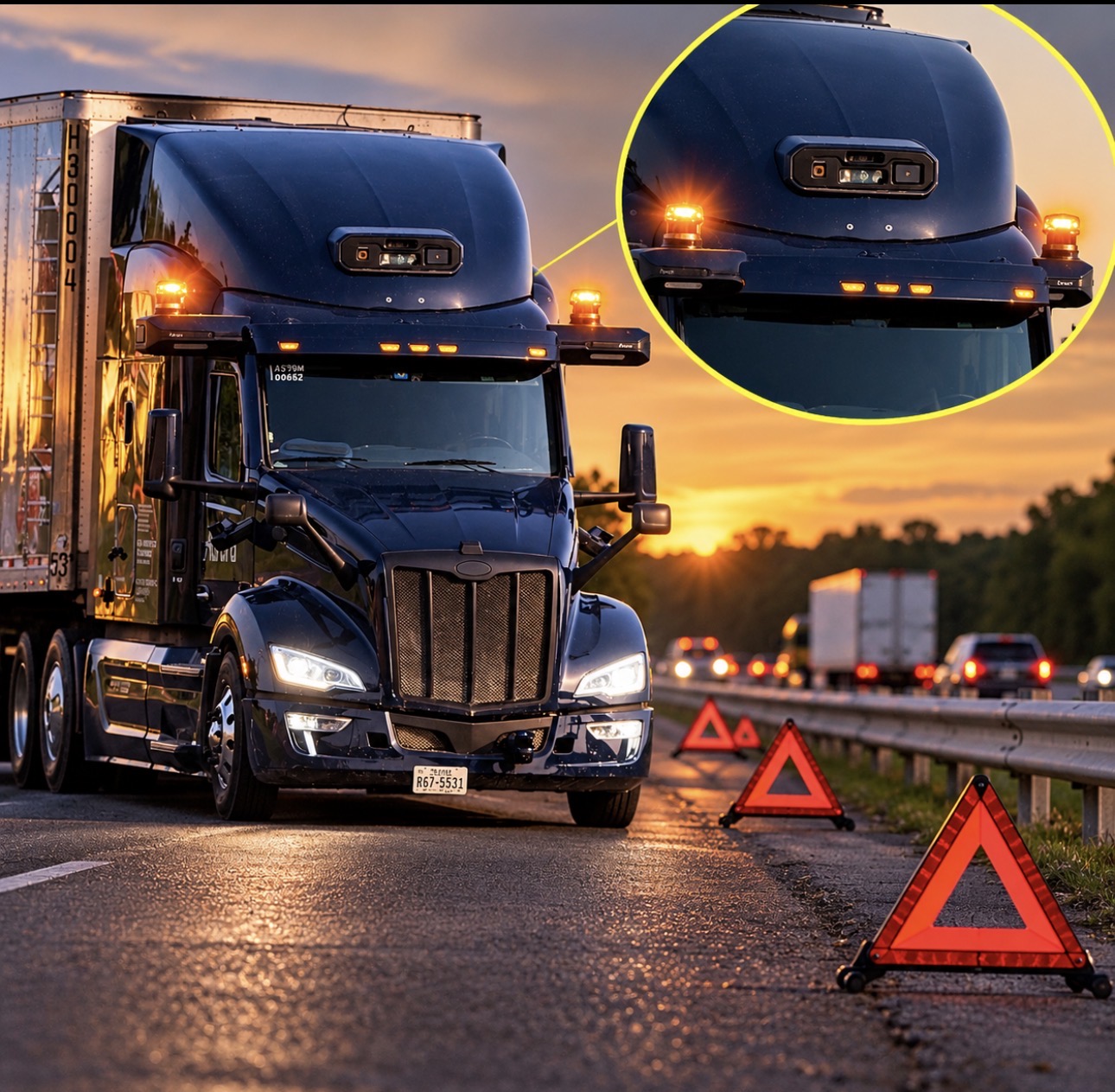
If your rig breaks down on the shoulder, you’re expected to get those warning triangles out. That’s been part of trucking for decades.
But apparently, when there’s nobody behind the wheel, the rules can change.
FMCSA has granted Aurora and other qualifying autonomous trucking operators a five-year exemption allowing driverless trucks to use flashing amber warning lights instead of the traditional reflective triangles.
The reasoning is pretty simple. If there’s no driver inside the truck, who’s supposed to climb out and set up the triangles?
Federal regulators believe the flashing warning lights can provide an equivalent or better level of safety. Qualifying autonomous operators will have to meet specific requirements, including reporting certain incidents involving the warning systems.
Meanwhile, regular truck drivers still have to follow the existing warning triangle requirements.
Now, there are arguments on both sides. Nobody wants an autonomous truck sitting on the shoulder without proper warning. And if flashing lights can do the job safely, maybe the technology makes sense.
But here’s the question for the people who actually spend their lives on the road.
If flashing warning lights are good enough for driverless trucks, why aren’t they good enough for trucks with drivers?
Should every trucker have the option to use an approved electronic warning system instead of walking down the shoulder placing triangles?
Or do you trust traditional reflective triangles more than flashing lights?
Truckers, what do you think? Is this a reasonable safety exemption, or should the same rules apply to everybody?
iTrucker News